Showing posts with label Susan Calder. Show all posts

Saturday, June 4, 2011

The big moment arrives!

Prepping for the prize draw: Sharon Wildwind stuffing the ballot box


The panelists getting ready to face the lions... er, audience: Sharon Wildwind, Joan Donaldson-Yarmey, Garry Ryan and Susan Calder listening while moderator Anthony Bidulka lays out the ground rules.


Somebody's getting excited !!!!


Audience members filing in to their first panel of the weekend. We had a full house thanks in part to our prime placement on the schedule and also to the stellar work of our panelists in pushing a draw-ticket/advertisement to every single person at the conference's opening reception.


And they're OFF!


It all winds down in a surprisingly short time, with a happy woman named Benny as the proud winner of the prize basket stuffed to the gills with books and other goodies provided by the panelists (plus a bottle of wine and and an Ink mug to drink it from).


This panel brought many positive comments and a lot of interest from mystery readers from across Canada. Many thanks to the Bloody Words Committee for hosting, the panelists for participating, our wonderful moderator Tony B for keeping all the conversational balls in the air, and Mystery Writers Ink and the Alberta Foundation for the Arts for funding support.

Wednesday, June 1, 2011

The Ink-sponsored panel at Bloody Words, June 3 at 6:30 p.m.

Moderator Anthony Bidulka. 

Would you cross this man?

The Russell Quant series is a multi award nominee including for the Crime Writers of Canada Arthur Ellis Award and Saskatchewan Book Award. The second book in the series, Flight of Aquavit, was awarded the Lambda Literary Award for Best Men’s Mystery.


Tony rides herd Friday, June 3 over the

'Writing the Open Range' panel at Bloody Words:


Panelist Sharon Wildwind


Sharon, a nurse, lives in Calgary and writes the Elizabeth Pepperhawk - Avivah Rosen series,  a Vietnam-War era set of mysteries about a nurse, a military policewoman and their combat-hardened pal Benny. A fascinating look at attitudes and anguish of a time almost forgotten only 40 years later. Sharon is a long-time member of Mystery Writers Ink in Calgary.


Panelist Garry Ryan 


Garry lives in Calgary and writes the Detective Lane series set in that city. A veteran of 30 years teaching teenagers to properly punctuate, he is more laid-back than his previous career would indicate. The fifth book in his series, Malabarista, is coming out this September.


Panelist Joan Donaldson-Yarmey

Joan, a travel writer with seven titles to her credit, used to live in Edmonton. She takes readers off the main roads into rural regions of Alberta with her mystery series starring travel writer Elizabeth Oliver.


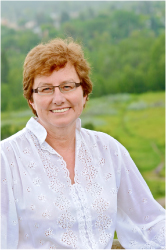
Panelist Susan Calder

Susan's debut mystery, Deadly Fall, features insurance adjuster Paula Savard, and has recently been released from TouchWood Editions. Susan is a long-time member of Mystery Writers Ink.


Follow the full Bloody experience at 

Writing the Open Range

Saturday, April 2, 2011

April Speaker and Announcements

Hi, Inksters and Friends


Apologies if you're getting multiple copies of this announcement over the past week. Some mail servers are currently rejecting mail from our mail host due to spammers (not us) abusing the system.

April Speaker: Susan Calder on the post-sale editing process. Susan's first mystery novel Deadly Fall was accepted for publication last spring. She was immediately assigned an editor and plunged into the process of whipping the novel into publishable shape. Susan will share the joys and challenges of working with your editor after the novel's acceptance. 7 p.m. on April 14 at Owl's Nest books.


This month's guest blogger is Alberta playwright, personality and YA mystery author Marty Chan, encapsulating for those of us who missed his AWCS workshop the rationale behind his low-key promotional style.

Meeting Marty Chan


Arthur Ellis Awards Shortlist Event 2011


Join us for the announcement of the shortlist for Canada’s national award for crime writing. Hear author readings by local mystery writers Jayne Barnard, Susan Calder, Linda Kupecek and Garry Ryan. Come and join the conversation.

Presented by Calgary Public Library and the Crime Writers of Canada.
Thursday April 28
6.30-7.30pm
Calgary Public Library
Central Library
Main Floor
New and Notable Area
No registration required


In other news:

The Alexandra Writers' Centre Society Spring Session begins April 20th with a wide array of courses, workshops and weekend intensives. Included this session are 8 week courses in Creative Writing, Novel, Short Story, Humour, and Writing for Young Markets with Shirlee-Smith Matheson. Last year's INK speaker Caroline Russell-King offers a weekend intensive in playwriting; INK member Susan Calder will teach a Dynamic Dialogue workshop on Saturday, April 23.

For a full course list and more information visit: www.alexandrawriters.org or phone 403-264-4730.


The Shuswap Writers' Festival takes place May 27-29 in Salmon Arm, BC. This year's presenters and workshop leaders include mystery authors William Deverell and Michael Slade.


And TWO short story contests upcoming:


The Wolfe Island "Scene of the Crime"

SHORT MYSTERY STORY CONTEST, 2011
• Contest open to Canadian citizens or those resident in
Canada and not previously published in the mystery or crime
fiction genre.

First Prize: $100 Second Prize: $50 Third Prize: $35
Contest Guidelines


• Adult category: 5000 word limit, prizes: $125, $100 and $75, plus two honourable mentions $25 each
• Student category (author is under 18 years old): 3000 word limit, prizes: $75, $50 and $35 plus two honourable mentions $20 each

Prize winners announced at When Words Collide a festival for readers, writers, artists, and publishers of imaginative fiction — Science Fiction, Fantasy, Mystery, Thriller, Romance and other genres.

August 12-14, 2011 in Calgary, AB.


REMINDER: If you have news or upcoming events of general interest to Inksters and other Calgary-area mystery writers and readers, send them to info@mysterywritersink.com for inclusion in the next e-nnoucements.


Jayne Barnard
Secretary-Treasurer
Mystery Writers Ink

Wednesday, March 2, 2011

Susan Calder's first novel cover


Exciting for all of us! The book launches on March 24th, 2011.

Congratulations to Susan!

Friday, September 10, 2010

My Journey Through the Editing Process - Part Two

In May, INK member, Susan Calder, signed her first book publishing contract for her mystery novel A Deadly Fall. She spent the summer editing the manuscript. Here is Part Two of My Journey Through the Editing Process.

On Tuesday, August 24th, I finished the major edits for my novel A Deadly Fall and e-mailed the revised manuscript to my editor, Frances Thorsen. She will read the novel in one swoop for overall effect and send me any further comments. Then, it's off to the copy editor. After the copy edit is done, I'll have a couple of weeks to proof-read the final version before the book goes to press.

Frances and I began our editing journey in June. I may be one if the few Calgarians who didn't mind our summer of less-than-wonderful weather. I rarely longed for the outdoors as I tapped away at my desk, editing my manuscript chapter by chapter.

Frances divided the novel into chunks of ten chapters. Using the Track Changes feature of WORD, she e-mailed me her suggested changes and comments one or two chapters at a time. I replied with my agreements or counter-suggestions or further comments. She'd volley back her replies. We'd keep going with this until we more or less reached a consensus for that chapter(s), at the same time moving forward with edits to the rest of the story. When chapters 1-10 were done, we worked on 11-20. My original novel had 33 chapters. It now has 32. We cut most of Chapter 20 and combined the remnants with a new small scene and the former chapter 21 to create one long chapter that seems to work.

Overall, I'd say Frances and I were in agreement about the story's major points. She understood all of my characters the way I did; we saw the story arc the same way. We sometimes differed on smaller points, such as word choices and punctuation. I deferred in cases where I wasn't sure what was right or felt her change wouldn't make a significant difference. These were relatively easy matters in terms of work load. More time consuming was writing new scenes and figuring out how to handle the effects of a deleted character and subplot.

Frances also raised questions I hadn't considered. These led us both to research such things as cell phone call tracing, Calgary transit schedules and criminal code terms.

When we were done, my task was to re-assemble the edited chapters into a new whole. This was harder than I'd expected due to my poor organization system. I also felt a need to read the novel through once again to check for errors due to the changes we'd made: references left in that should no longer be there, details inadvertently removed with the deleted character or subplot and extra spaces, double periods and crossed out letters left behind from the Track Changes.

Between the additions and deletions, the edited manuscript is about 6,000 words less than my original. I believe it's more focused and interesting to readers.

Now I get a brief rest before plunging into the next book. On September 9th, TouchWood publisher, Ruth Linka, has arranged a conference call with Frances and me to discuss future novels in the mystery series. I'm almost glad I had to wait three years to find a publisher, as this gave me time to write and revise a sequel. I feel a step ahead, rather than panicked about facing the blank page. As a result of this editing experience, I'd like to do another revision before sending the sequel to Ruth and Frances. Meanwhile, I'm mulling ideas for novel number three.

I had to push myself to make the September 1st target for the edits in the midst of my summer activities: hiking, visitors and short trips. The push has paid off. The day after I sent Frances the edited manuscript, Ruth Linka contacted me. A mystery novel scheduled for spring 2011 had to be postponed. Frances told her the editing has gone well. How would I feel about moving my fall 2011 publication date forward six months to spring 2011, possibly March?

I feel excited and scared. March isn't so far away. This book is really going to happen.


For Part One of this series, see Susan's previous post.


Friday, July 2, 2010

My Journey Through the Editing Process - Part 1

INK member Susan Calder signed her first book publishing contract in May for her mystery novel A Deadly Fall. She immediately plunged into editing.

Here is Part One of My Journey Through the Editing Process:

As soon as we signed the contract for my novel A Deadly Fall, TouchWood publisher, Ruth Linka, introduced me by e-mail to my editor, Frances Thorsen. Ruth reminded Frances and me the edited manuscript was due September 1st and left us alone to whip my novel into shape.

Frances and I began by exchanging personal details. She is the owner/operator of Chronicles in Crime, a Victoria bookstore specializing in murder mysteries. She founded the store with her personal stock of 8,000 books. An editor who is a bookseller and avid mystery reader: Cool. We discovered we shared some common ground. Frances graduated from the University of Waterloo. So did my son. She lived in downtown Toronto near Bloor Street. So does my other son. She longs to fly a glider plane. I ... I admire her spirit of adventure.

Frances assigned me my first editing tasks: write a detailed character sketch of my main character and prepare two spreadsheets: (1) a timeline of events that impact the plot and (2) a character chart listing each character's purpose to the book, relationship to the protagonist and the chapters in which the character appears. Part of the purpose of the chart is to determine if characters are lacking or if certain people aren't needed because they are duplicating other characters' roles.

Uh oh, I thought, she's going to ask me to cut characters. I like them all and every one is essential to the book.

I haven't worked with spreadsheets for years, but came up with the charts without much difficulty, thanks to outlines I'd prepared while revising the manuscript. Right away, the character chart requested by Frances pointed me to one person I might cut from the novel. I started to mull over ways someone else might take over the cut one's contribution to the plot.

Next, Frances sent me her general comments on the manuscript, so I'd know where she was coming from during the edits. A few of her comments struck me as requiring major changes. How would we ever get through this by September 1st? This was going to take tremendous work. It looked like A Gruelling Summer would precede A Deadly Fall.

I skimmed through the novel in light of Frances' comments and considered the ripple effects of any changes to the story. I decided I could apply most of Frances' comments and e-mailed her questions and concerns about the rest. She replied that her comments were just suggestions. Her answers to my specifics assured me we were on the same page.

Deep breath. Exhale. Feeling better.

Frances sent me the edits for the first two chapters. We will be working with Track Changes. It took me awhile to find these on my WORD menu - they are under "Review". I was unfamiliar with the mechanics of Track Changes and am still getting the hang of them, but find it fun clicking "accept" or "new comment" to her proposed changes. She also highlights scenes for me to cut and paste into a separate file of material that might used later in the story. We agreed I would write two new scenes for Chapter 2. These turned out to be shorter and easier to do than I'd expected. The character sketch I'd written helped with one of the scenes.

Aside from some niggling bits, we've finished the Chapter 1 & 2 edits. Frances says the first part of the book is always the hardest. So it isn't only me who thinks that? She's now working on her edits for Chapters 3-10. I wait for this next batch, feeling good to have gotten this far. This editing process will be okay, even enjoyable, I think - at the moment.

Susan

Saturday, May 15, 2010

The Rest of My Long Journey to a Book Contract

INK member, Susan Calder, signed her first book publishing contract this week for her mystery novel, "A Deadly Fall." Here is Part Two of her story of how she got there. Check out Part One, posted last week.

My Long Journey to a Book Contract

Part 2:

In spring 2007, I completed my first mystery novel A Deadly Fall. After five drafts, I prepared to query publishers and agents. The story is set in Calgary and my preference was to publish in Canada.


My preparations began at a Writers Union of Canada one-day presentation on publishing. The presenters offered advice on manuscript submissions and query letters and a list of reputable Canadian agents. At home, I checked the agents’ websites and found a half dozen who were receptive to both unsolicited submissions and mystery genre books. I got my list of potential publishers from the Crime Writers of Canada website. That spring, they listed all the books submitted for the Arthur Ellis Awards, with authors’ and publishers’ names.


Large Canadian presses don’t have submission guidelines on their websites, since they don’t officially accept unsolicited submissions. They also don’t mention their editors’ names, probably so they won’t be flooded with queries from aspiring writers. The WU presenters said the big presses secretly comb the slush pile, not wanting to miss the next hot thing. They recommended sending a query letter and the novel’s first three chapters to the appropriate editor. I found those editors by going to the library and bookstores and studying the acknowledgements in the Arthur Ellis nominees’ books.


Small Canadian presses generally welcome submissions and post guidelines on their websites. Typically, they want a synopsis and the first few chapters, although some request the entire manuscript from the start.

My next step was to draft a query letter. People say this letter is vitally important. I modelled mine on the WU presenters’ sample, ran it by friends and scrutinized every word.


In June, 2007, I mailed my first batch of queries – to five large or medium-sized Canadian publishers and one agent. Three weeks later I received a request for the full manuscript from the agent. Wow. I was on my way. Four months later the agent sent an encouraging letter rejecting my novel. She liked the book, but felt new mystery writers were too hard a sell and had a few problems with my story. Her critique led me to make another, minor, revision before sending out more submissions.


I continued querying agents and publishers in batches and received form rejections and rejections with positive comments. Many publishers and agents did not reply. A second agent asked for the manuscript. She also liked the book but felt Canadian publishers weren’t buying mysteries from new authors. I entered unpublished mystery novel contests and didn’t place. I discovered more possible publishers through sources like Quill and Quire magazine. In July-Aug, 2008, I queried my 14th to 17th publishers. In November, one of them requested my manuscript – my first publisher’s request after almost a year and half of querying. In January, 2009, I got a request from Publisher Number 17, TouchWood Editions.


Statistically, publisher’s requests have about a 10 percent chance of leading to a contract. During the coming months, I queried 10 more publishers, knowing some were extreme long-shots. I sent e-mail follow-ups to the publishers who had my manuscript. An editor I’d sent it to unsolicited said he was passing it along to his publisher. I had a third faint hope.


In January 2010, I received an e-mail from Ruth Linka, the publisher of TouchWood Editions. She asked if my novel was still available and said she wanted to give the manuscript to another reader. I was too afraid to hope and knew my novel could go down to a final meeting, where it would be passed over for someone else’s.


I felt I was down to the wire with Canadian presses. I had tried all the ones I knew of that might conceivably publish my mystery novel - 26 in total. I expected to know by spring if my three hopes would fall through and came up with a Plan B: Revise the novel and try the US and British market. I was not looking forward to this.


In March, I went to Australia on holiday. Three days after I left, Ruth Linka called my home. The following week she e-mailed, asking for a convenient time to phone me. It took a week for me to get these messages and longer to find a suitable time to phone her from Australia. She made an offer to publish my novel. I was thrilled to say yes.


Back home, it all seems to be happening so quickly. I signed the contract with TouchWood this week. Next week, Ruth will put me in e-mail touch with my editor and in-house promotions person. I’ll be spending the summer editing and the year after that gearing up for the book launch.


It has been a long, hard eighteen years that don’t feel so bad now that they’re over. There were many times I felt like quitting, felt my writing didn’t measure up and felt I’d never get here. What kept me going, I think, is that I enjoy the writing process. I like sitting in my room making up stories. I like going over and over them to develop their meaning and make them come across to others. I like learning techniques to make my writing and stories better.


I also enjoy the social aspect – attending writing group sessions and gatherings and classes, meeting fellow writers and making new friends.


Now, I’ll enjoy the social part of giving readings, presenting at festivals and conferences and, I hope, connecting my stories to readers.

Susan Calder
Author of "A Deadly Fall"
coming in 2011 from TouchWood

Thursday, May 6, 2010

My Long Journey to a Book Contract

INK member, Susan Calder, signed her first book publishing contract this week for her mystery novel A Deadly Fall. Here is Part One of her story of how she got there. Tune in to Part Two next week

Part 1:

Nineteen years ago, I decided to become a writer. Aside from letters and term papers, I hadn’t written anything since high school. I plunged into a semi-autobiographical novel I expected to finish in a few months. Within a few years, I knew it would hit the bestseller lists.


It didn’t work out that way.


I quickly realized I had a lot to learn about writing and enrolled in Concordia University continuing education courses in Creative Writing and Magazine Writing. For the latter, we had to write an article and query letter targeted to a magazine or newspaper. At the time, I was living in Montreal and was an avid reader of The Montreal Gazette newspaper travel section. I wrote a travel piece about the Calgary Stampede, which I had visited the previous summer, and sent my query to The Gazette travel editor.


I sweated his reply. Two months passed. Why was he taking so long? One night, while I was at a school parent committee meeting, the editor phoned. He wanted to publish my article. I couldn’t stop smiling for a week. This writing-thing had been the right choice. It was going to be easy.


I queried magazines with other travel article ideas. And received rejections. I wrote a short story and sent it to a literary magazine. Rejected. I started two murder mystery novels and abandoned them after a couple of chapters.


A short story I started morphed into a novel. A year later I had a first draft – 1,000 pages. Even I could see that was a tad long for a first book. I ruthlessly cut it in half.


My husband’s job transfer took me to Calgary, where I discovered a thriving writing community. I joined the Calgary Writers’ Association (now defunct) and the Alexandra Writers’ Centre Society, where I took courses and later served as president. I became a member of the Writers’ Guild of Alberta and Mystery Writers’ INK. All of these groups taught me much about the writing craft, offered tips on getting publishing and brought me into contact with fellow writers. Many have offered support and advice over the years and become valued friends.


All this time, I worked on my novel in workshops, classes and critique groups. I radically revised it, polished it up and sent it out to the publishing world.


No one was interested.


Discouraged, I turned to short stories, which I could finish in a much shorter period. My plan was to publish some for recognition and a feeling of accomplishment. The plan worked, albeit slowly. I kept sending my stories out, receiving rejections, sending them elsewhere. Gradually a number were accepted. Each acceptance gave me a mental boost. My story credits lead to an offer to teach writing courses at the Alexandra Writers’ Centre, an activity I thoroughly enjoy. They also provided a track record that became a selling point down the road when I queried publishers about my murder mystery novel.


I started the mystery novel in the fall of 2003 and finished the first draft by Christmas. The following summer I brought the first two chapters to a one week workshop with author Fred Stenson at the Alexandra Writers’ Centre. Fred and the class attacked my work. I wound up with a tighter, much improved opening. A fall novel course at the AWCS with author Eileen Coughlan gave me direction for the rest of the book. I wrote the second draft and took a few middle chapters to The Sage Hill Writing Experience Fiction Workshop with Steven Galloway, a literary writer who believes in the importance of plot. My Sage Hill critiques propelled me into draft number three. When I finished it, I considered beginning queries, but something about the book didn’t feel right. I registered for a Booming Ground online mentorship with Lawrence Hill, another author who values plot. After a gruelling year of work I had the book I wanted. I did a fifth draft based on comments by Hill and friends who had read the manuscript. I was ready to query agents and publishers.

[end of Part 1 - watch for Part 2 next week]